Almost every leader today wants to see an instant productivity leap from adopting artificial intelligence (AI). But the reality is harsh: research and interviews show that roughly 80% to 90% of companies see no tangible return or benefit from AI adoption. The biggest mistake? Companies still treat AI as a pure IT project, completely ignoring business architecture and the human factor.
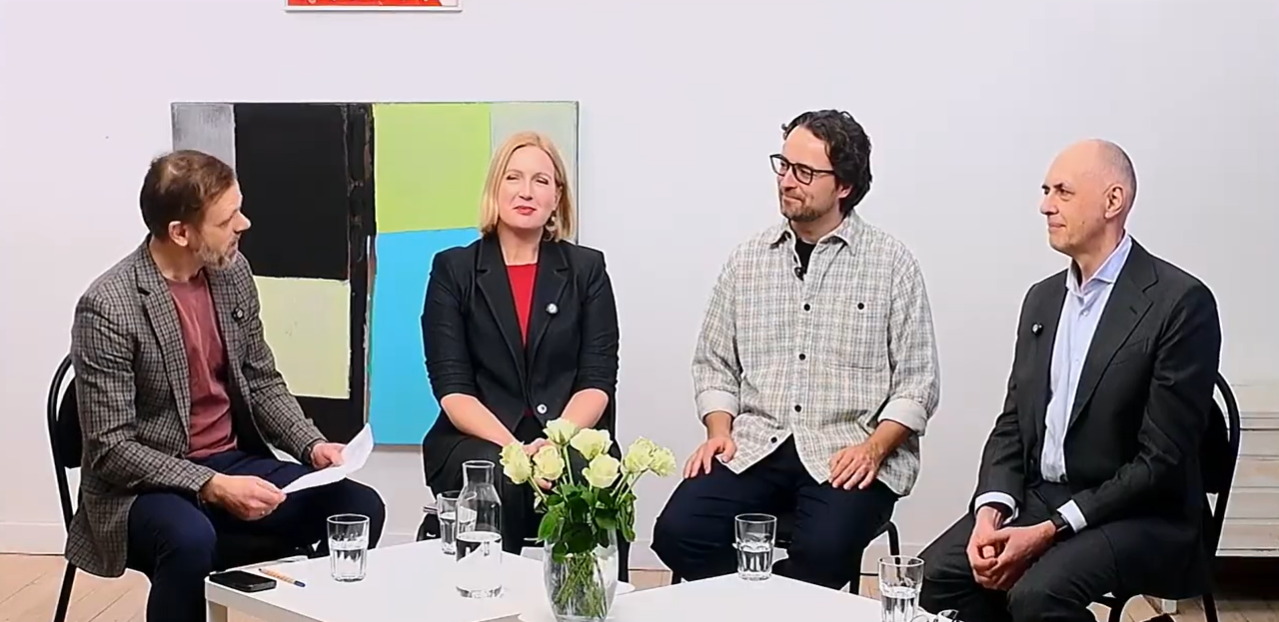
To look for solutions to this challenge, AI Master Lab brought together a panel of experts: change management expert and organizational psychologist Iveta Bikse, international AI trainer and HR expert Dov Zavadskis, and AI Master Lab partner and business strategist Guntis Kalniņš.
In this article, we've gathered the discussion's key points and practical steps for moving companies from "chaotic experimentation" to profitable, safe AI integration.
1. "Shadow AI" and security risks: what employees are hiding from management
The numbers are striking – around 78% of office employees already use generative AI daily, yet nearly half of them hide it from management. This phenomenon, known as shadow AI, creates enormous risks for companies.
- Uncontrolled tools and data leaks: Employees install various free tools and browser extensions and connect them to company files (such as Excel spreadsheets) without reading the terms of use. This creates a direct threat to the security of sensitive data.
- "Quiet promotion": If an employee gets work done faster thanks to AI, they often fear telling their manager. Why? Because the "reward" for efficiency is usually just a bigger workload, with no pay rise.
- Blind trust in hallucinations: Working under time pressure and without clear guidelines, employees rely completely on AI output, ignoring these systems' tendency to "hallucinate," or make up facts. This can lead to costly mistakes that companies pay for with their reputation.
The solution: Company leadership needs to create a clear AI policy and AI guidelines. Banning tools outright makes no sense. What's needed is a definition of which tools are safe, what data may be entered into them, and how to verify the quality of the output.
2. The middle-manager trap and "techno-stress"
Middle managers currently find themselves caught in the crossfire. On one side, senior leadership demands efficiency and results. On the other, quiet fear and resistance run through the team, as employees worry about losing their jobs.
This creates a new phenomenon – techno-stress and burnout risk. Employees and managers feel confused, unsure what will be expected of them tomorrow. As our experts point out, the "psychological contract" between employee and company is currently being rewritten, and many find that unsettling.
How can a manager get out of this trap?
- Cut back on micromanagement and focus on people: AI is excellent at structuring information and passing on messages, but it cannot offer human support. A manager's greatest value today is the ability to talk about the topics no one else raises, and to help the team adapt.
- Define what WE stop doing: Efficiency doesn't mean working 20 hours a day. It's the manager's job to help employees understand which processes to hand over to AI, and how to put the time gained to good use.
- Be like children – experiment: In this fast-moving period of change, no one is an absolute expert. The best managers are the ones willing to show vulnerability, admit they don't have all the answers, and learn alongside their team.
3. HR transformation: from administrative support to AI champions
The HR department has historically been seen as one of the less technology-driven functions. Yet it is HR that now needs to become the bridge between IT technology and people.
- Change management: Technology rollout accounts for only 10% of success, data for 20–30%, and the remaining 60–70% comes down to people and organizational culture. If HR doesn't get involved in change management, any system rollout will fail.
- Synergy with IT: The HR of the future is no longer just "personnel administration." HR needs to work hand in hand with the IT department. In the US, roles such as Talent Engineer are already emerging – technical specialists who work specifically on talent acquisition and HR data analytics.
- Finding internal "champions": Instead of relying only on outside consultants, HR's job is to identify the company's own AI enthusiasts. Give them a platform (for example, 15 minutes in the weekly meeting) to share real-world examples and inspire the rest of the team.
Watch the full panel discussion
We've added Latvian subtitles to the recording. Watch the full conversation to learn more about:
- Why employees who work with AI in the US earn up to 50% more
- How to tell work done "with AI" apart from work done entirely "by AI"
- What awaits us in the age of autonomous AI agents, and why the Baltic states need to move fast to avoid losing global competitiveness